Looking to build strength and lose fat without the gym? Discover this beginner-friendly strength training at home guide — including workouts, tips, and equipment alternatives.
Strength training is not just for athletes or gym-goers — it’s one of the most effective ways to improve your overall health and body composition. Whether you’re trying to lose weight, build lean muscle, or simply improve posture, this form of training helps.
Benefits of Strength Training
| Health Benefit | Explanation |
| Builds Lean Muscle | Increases strength and helps shape your body |
| Boosts Metabolism | Burns more calories even while resting |
| Improves Bone Density | Reduces the risk of fractures and osteoporosis |
| Enhances Posture and Coordination | Strengthens your core and stabilizing muscles |
| Supports Long-Term Weight Loss | Helps maintain a healthy body fat percentage |
| Improves Mental Health & Mood | Reduces anxiety, stress, and depression symptoms |
Related: 10-Minute Fat-Burning Workout at Home
What You Need to Get Started (Minimal Equipment)
You don’t need a fancy home gym. Start with basic items you likely already have at home.
Equipment List
| Item | Purpose |
| Bodyweight | Core component of strength training |
| Resistance Bands | Add resistance without bulky weights |
| Water Bottles/Dumbbells | Light weights for upper body movements |
| Yoga Mat or Towel | Comfort during floor exercises |
| Chair/Bench (optional) | Helps with modified or seated movements |
Optional: Use a backpack filled with books as a homemade weight.
Beginner Home Workout Plan (Full Body, No Equipment)
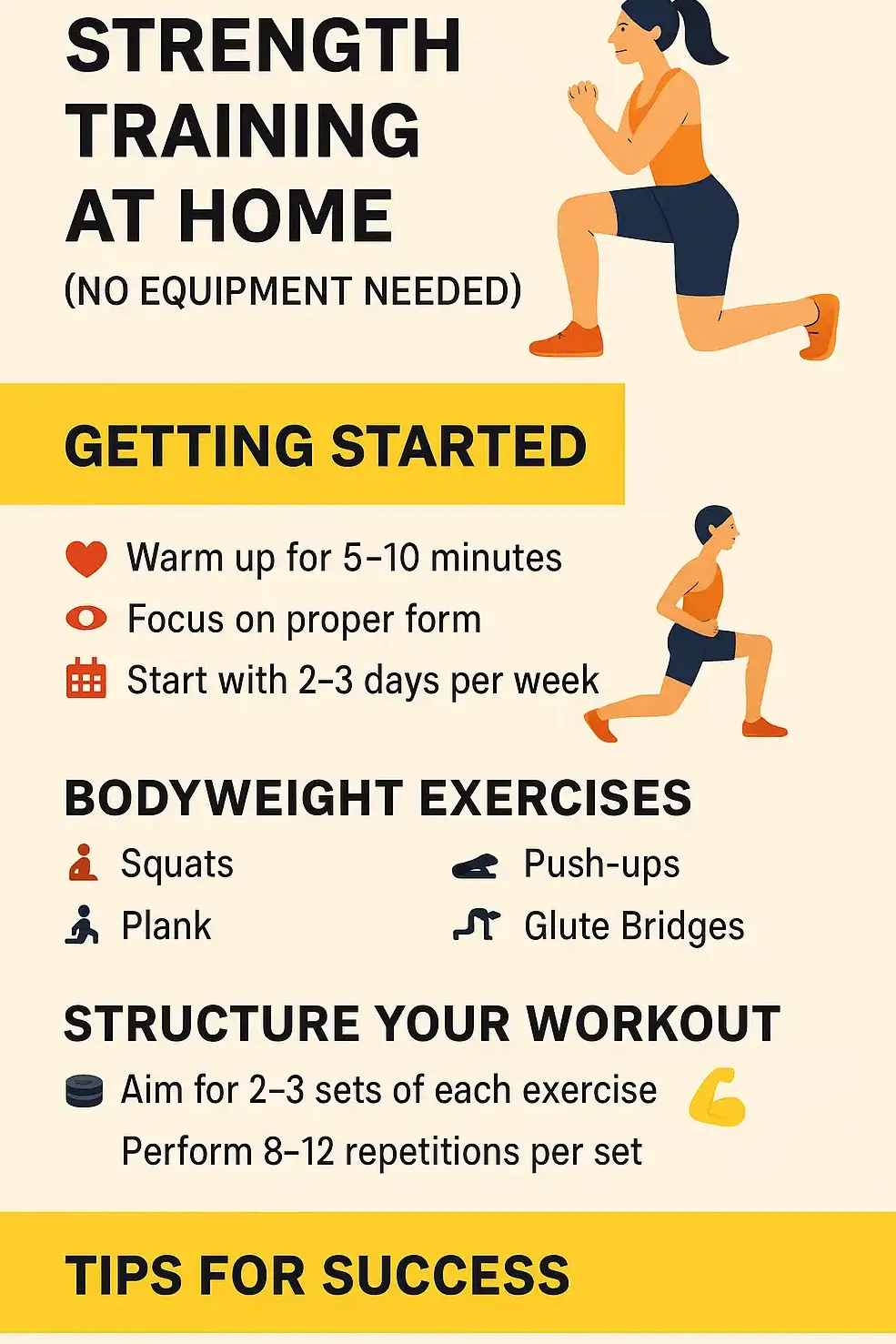
Do this full-body workout 2–3 times a week, leaving at least one rest day in between.
Beginner Strength Workout Routine
| Exercise | Reps/Time |
| Bodyweight Squats | 12 reps |
| Push-ups (Knees or Full) | 8–10 reps |
| Glute Bridges | 15 reps |
| Bent-over Rows (Water Bottles) | 12 reps |
| Plank Hold | 20–30 seconds |
| Standing Calf Raises | 15 reps |
Repeat the full circuit 2–3 rounds
Rest 60–90 seconds between rounds
Tip: Always warm up for 3–5 minutes before starting. Try jumping jacks or jogging in place.
Tips for Beginners: Get the Most Out of Your Workout
- Focus on Form: Learn proper technique to prevent injury and ensure muscle activation
- Start Slow: Master basic moves before adding resistance
- Be Consistent: 2–3 short sessions per week is enough to see results
- Track Progress: Use a fitness journal or app
- Don’t Fear Soreness: Muscle soreness is normal for beginners
When to Make Your Workout Harder
Once your body adapts to the current routine, here are a few ways to increase the challenge:
| How to Level Up | Example |
| Add More Reps/Rounds | Go from 2 rounds to 3 or 4 |
| Use Resistance Bands | Especially for rows, squats, and glutes |
| Slow Down Reps | Increase time under tension |
| Try Harder Variations | Knee push-ups → Standard push-ups |
Who Is This Workout For?
This beginner strength routine is ideal for:
- People new to fitness
- Busy individuals who can’t go to the gym
- Those looking for a low-cost way to stay active
- Anyone aiming to build strength safely at home
Final Thoughts
Strength training at home for beginners is simple, affordable, and incredibly effective. You don’t need weights, mirrors, or machines — just commitment and a little space.
Start where you are. Focus on form, stay consistent, and your strength, energy, and confidence will grow with every session.